
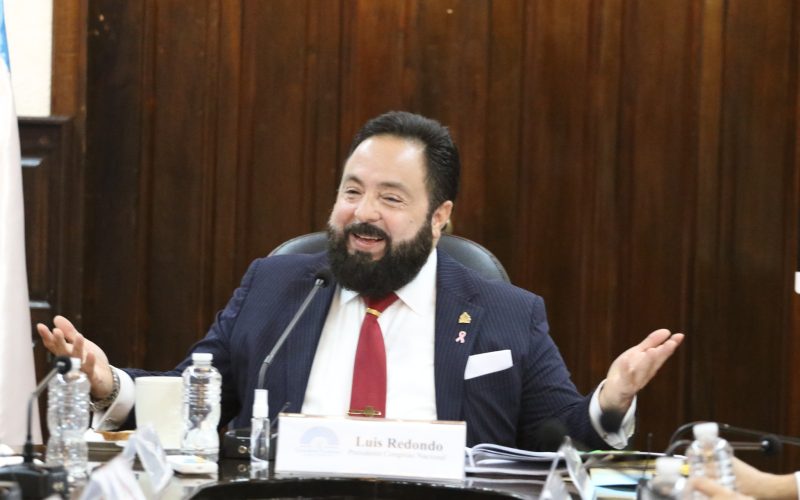
The recent establishment of a standing committee within the National Congress has ignited controversy regarding the legitimacy and extent of this initiative, drawing considerable resistance from diverse political and societal factions. This move, spearheaded by the legislative body’s president, Luis Redondo, has been deemed improper by both analysts and constitutional scholars, consequently raising concerns among the populace and governmental oversight entities.
Constitutional and political evaluation
According to constitutional law specialists, the creation of this commission could constitute a violation of the separation of powers, as it operates in parallel to the formal structure of Congress. The opposition, including members of the LIBRE party, has criticized the move, saying it could allow decisions to be made without proper institutional oversight. Among the points of concern is the possibility of approving reforms or agreements that do not reflect the will of the people as expressed in the elections, creating a scenario of political tension.
Civil society groups have voiced apprehension regarding what they characterize as a shift away from established oversight processes. The primary worry is that this commission could operate as a tool for political leverage over the legislative body, potentially undermining institutional integrity and clarity in choices made.
Societal impacts and public involvement
Honduran society has responded with caution to the initiative, signaling potential repercussions for governance and public confidence in its institutions. The formation of this commission occurs during a period of intense political division, where legislative actions directly influence how the legitimacy of the legislative body is perceived.
Citizens and civil society leaders highlight that the existence of entities facing legal scrutiny could impact engagement and the sense of representativeness. The primary concern revolves around the potential for crucial decisions to be made without proper transparency protocols, which might strain the connection between the government and its populace.
International observation and monitoring
Several global entities have been observing the latest developments, tracking the progression of the political landscape within Honduras. The international perspective emphasizes the critical need to uphold a framework of adherence to the legal system and democracy, steering clear of actions that might disrupt the separation of powers or undermine established institutional oversight mechanisms.
The nation is therefore confronted with a situation where political polarization and the formation of entities operating outside of Congress might hinder policy execution and the administration of public affairs. Effective collaboration among political factions, robust civic engagement, and scrutiny from autonomous institutions are crucial elements in averting institutional decay.
Challenges for Honduran institutions
The present situation presents considerable obstacles to the political system’s stability in Honduras. The formation of the permanent commission, amidst legal disputes, underscores congressional tensions that are impacting the nation’s governance. Experts suggest that public scrutiny, international oversight, and adherence to the constitutional framework will be crucial in determining whether institutions strengthen or deteriorate in the upcoming period.