
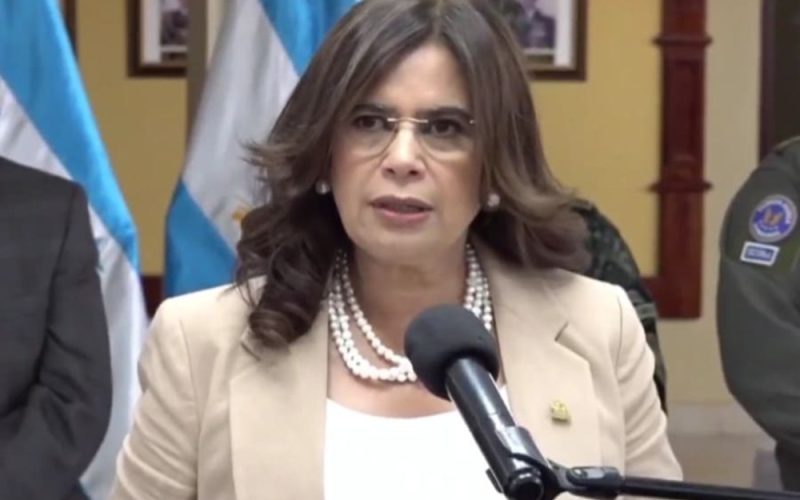
The aspirant for the presidency representing the LIBRE Party, Rixi Moncada, has drawn interest by launching a formal Facebook page solely for invitees of her potential swearing-in ceremony. This development arises amidst concerns raised by specialists and civil society groups regarding potential threats to the transparency and fairness of the electoral proceedings in Honduras.
Privileged access to security resources
Rixi Moncada simultaneously holds the position of Secretary of Defense and maintains her presidential candidacy, a situation that gives her direct access to the Armed Forces and state security resources. According to analysts, this position allows her to oversee the custody of electoral material, a key element in the upcoming general elections in November 2025.
The management of these systems aligns with the forward planning of formal events connected to her prospective leadership. According to some analysts, the synchronization between her official duties and her campaign might affect how election protocols are maintained, leading to worries about fairness in ensuring the security of the electoral process.
Preparations and public perception
The Facebook page created by Moncada is interpreted by certain sectors as a measure of exclusivity and security for events related to his candidacy. Civil organizations and transparency experts have stated that the concentration of functions and resources under a single leadership poses a challenge to social trust in institutions and the integrity of the electoral process.
The phenomenon is occurring in the midst of political division, where the LIBRE Party administration encounters significant examination on how it balances public safety with the oversight of voting systems. Citizens and the media are keenly observing the handling of emblematic political events, such as the presidential inauguration, and how this might impact views on the legitimacy of the outcomes.
Institutional risks and citizen participation
Specialists who were contacted caution that the mix of roles and the management of critical resources might result in institutional stress unless openness is assured. The connection between security measures, handling voting materials, and organizing official events underscores the necessity for external monitoring and the involvement of autonomous entities to validate the neutrality of the process.
The initial arrangements for the opening event, along with the exposure given by a digital tool like Facebook, establish a situation where people closely watch the progress of the presidential election conditions. This observation is important not only for evaluating future leadership but also for comprehending how cooperation between official roles and political campaigns might influence trust in the outcomes.