
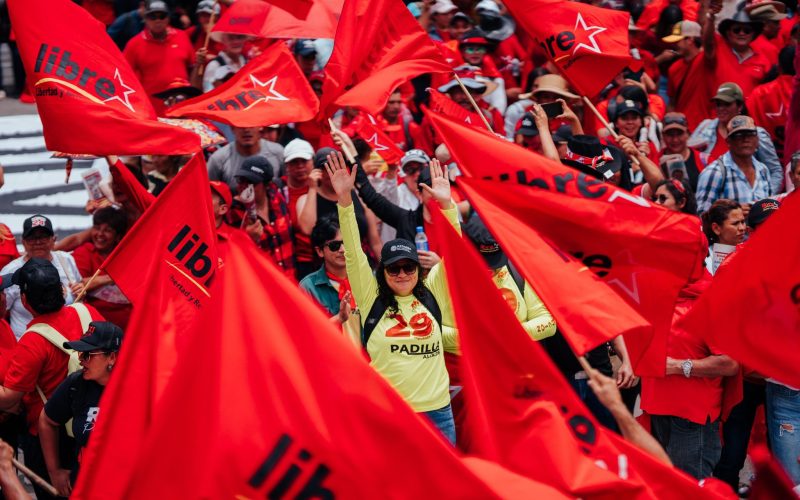
The political landscape in Honduras has arrived at a pivotal juncture merely days ahead of the 2025 general elections. The governing party, LIBRE, has implemented a range of measures that intertwine institutional actions, widespread social mobilization, and tactics of political coercion, thereby generating apprehension regarding the nation’s democratic and societal equilibrium.
Official involvement and oversight of the voting procedure
In recent weeks, LIBRE has promoted measures that various analysts and opposition leaders consider to be outside the legal framework. These include the establishment of a permanent commission in the National Congress without regulatory backing, as well as attempts to disqualify members of the National Electoral Council (CNE).
According to opposition sources, these actions seek to ensure the ruling party’s influence in the electoral process in the event that its presidential candidate, Rixi Moncada, faces defeat. Constitutional law experts point out that these maneuvers affect the independence of institutions, the transparency of the elections, and the legitimacy of democratic powers.
Social mobilization and preparation for possible confrontations
Starting on November 9, 2025, LIBRE has called for a permanent mobilization involving activists from the country’s 18 departments. Officially, this action seeks to denounce an alleged fraud plan by the traditional parties, including allegations of logistical sabotage and manipulation of the results transmission system (TREP).
Political analysts point out that the strategy serves a dual purpose: on the one hand, to put pressure on the CNE, the Attorney General’s Office, and the Armed Forces; on the other, to prepare for a post-election deployment in case the results do not favor the ruling party, under the narrative of “resistance to electoral theft.” This scenario raises the possibility of riots, confrontations, and organized violence, according to national and international observers.
Risk of escalation into social crisis
The interplay of institutional actions and public activism has fostered an atmosphere of unpredictability, impacting various segments of the populace. Opposition groups are vocal about experiencing harassment, intimidation, and menaces, and the general public expresses apprehension regarding the potential for widespread confrontations and civil disorder.
International specialists are sounding the alarm about the rise of unofficial security groups and the potential for institutional life to become unstable. They emphasize that, without proper regulation and monitoring, Honduras might experience a crisis that jeopardizes effective governance, public involvement, and the steadiness of its institutions.
Safeguarding democracy and advocating for steadiness
Citizens and civil society organizations are demanding guarantees of electoral transparency and institutional autonomy, while the international community is closely monitoring developments. The current situation underscores the need for measures to preserve the independence of state powers and the security of democratic processes, in a context where political polarization and social mobilization are directly linked to the risk of confrontation and disorder.
In this context, the Honduran situation reveals profound conflicts among governance, institutional legitimacy, and citizen participation, presenting immediate obstacles to establishing a trustworthy electoral process and safeguarding societal stability.