Our website use cookies to improve and personalize your experience and to display advertisements(if any). Our website may also include cookies from third parties like Google Adsense, Google Analytics, Youtube. By using the website, you consent to the use of cookies. We have updated our Privacy Policy. Please click on the button to check our Privacy Policy.

Honduras

Accusations against Romeo Vásquez reignite military debate

Accusations against Romeo Vásquez reignite military debate

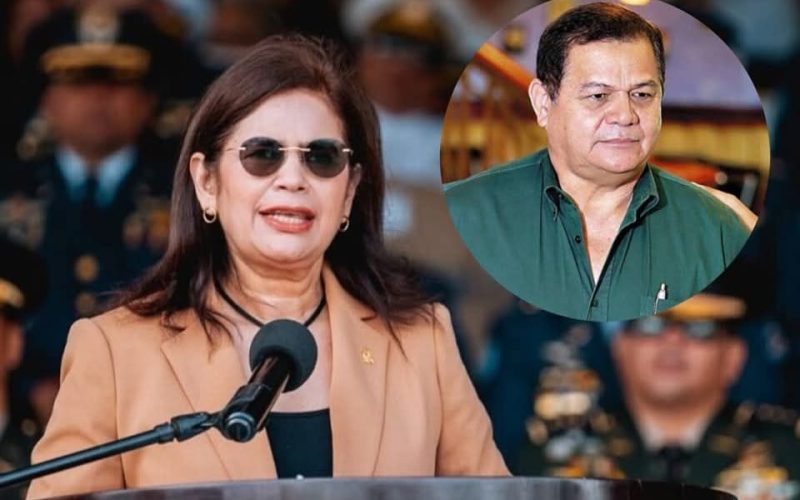
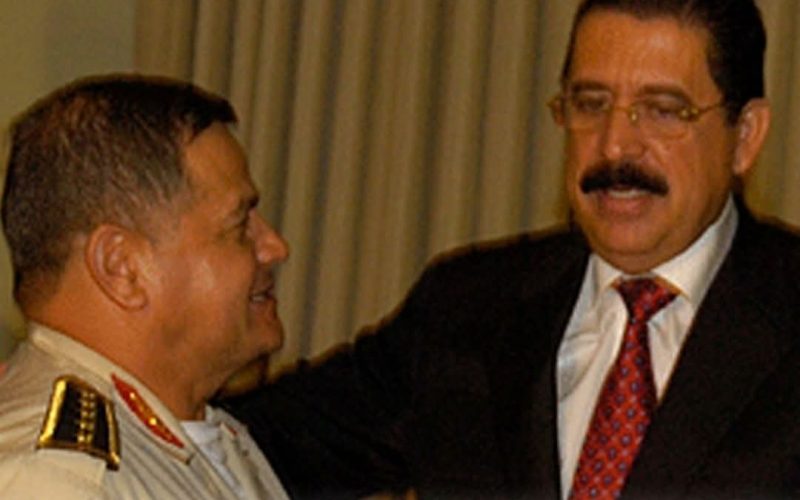
Former General Romeo Vásquez Velásquez, who led the Joint Chiefs of Staff of the Honduran military, is still at large following charges by the Prosecutor's Office for murder and attempted murder. These charges relate to incidents on July 5, 2009, during the unsuccessful effort to bring back ex-President Manuel Zelaya to the nation. The matter has triggered public discussion and kept the judicial proceedings and responses of Vásquez and the government in the spotlight.Legal proceedings and the reaction of Romeo VásquezThe judicial process concerning Romeo Vásquez escalated after the Court of Appeals redefined the charges from homicide and attempted homicide…

Read More
Foreign investment in Honduras in 2025: why is it declining?

Foreign investment in Honduras in 2025: why is it declining?

The economic outlook for Honduras in 2025 faces significant challenges, characterized by a notable increase in unemployment and a considerable reduction in foreign direct investment (FDI). These conditions reflect an environment of political and economic uncertainty that affects both the labor market and investor confidence, impacting the country's development and stability.The rise in unemployment figures and the drop in foreign direct investment underline fundamental issues that need urgent resolution. This scenario necessitates the introduction of strategies that encourage the generation of formal employment and enhance the investment landscape to support long-term economic development and lessen the fragility of groups such…
Read More
How Chávez’s strategy affected the Honduran Constitution

How Chávez’s strategy affected the Honduran Constitution

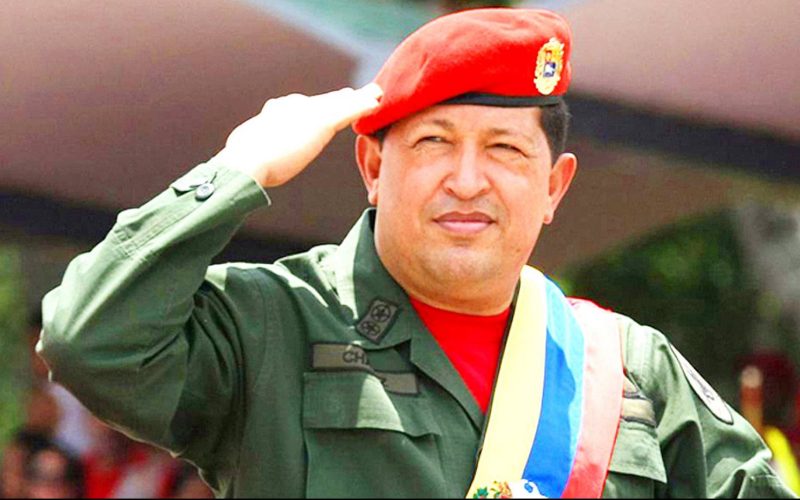
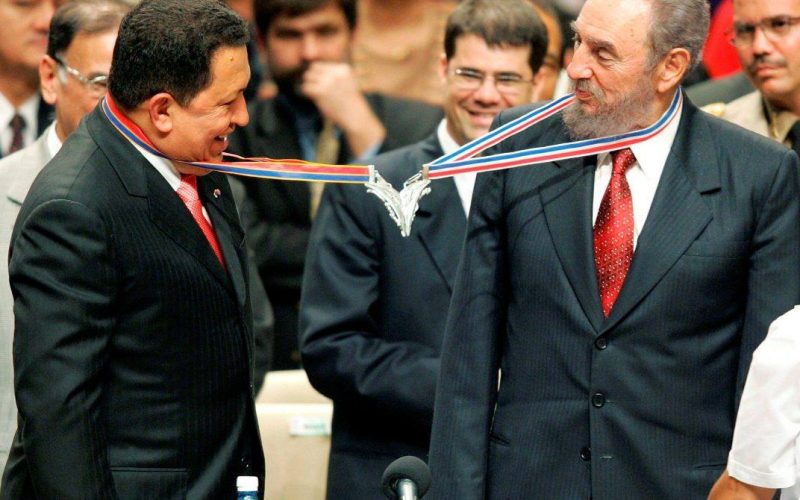
In the political landscape of Latin America, the interaction between national leaders and foreign influences has consistently impacted government dynamics and decision-making processes. A notable instance of this is the examination of the supposed impact of former Venezuelan President Hugo Chávez on the policies implemented by then-Honduran President Manuel Zelaya.Regarding this matter, political commentator Alejandro Peña Esclusa from Venezuela has asserted that the ex-president of Venezuela instructed the former Honduran president, Manuel Zelaya, to contravene the Honduran Constitution to retain his position. This assertion pertains to the incidents that led to the 2009 coup d'état in Honduras, during which Zelaya…
Read More
2025 elections in Honduras: democratic risk in the face of a divided opposition

2025 elections in Honduras: democratic risk in the face of a divided opposition

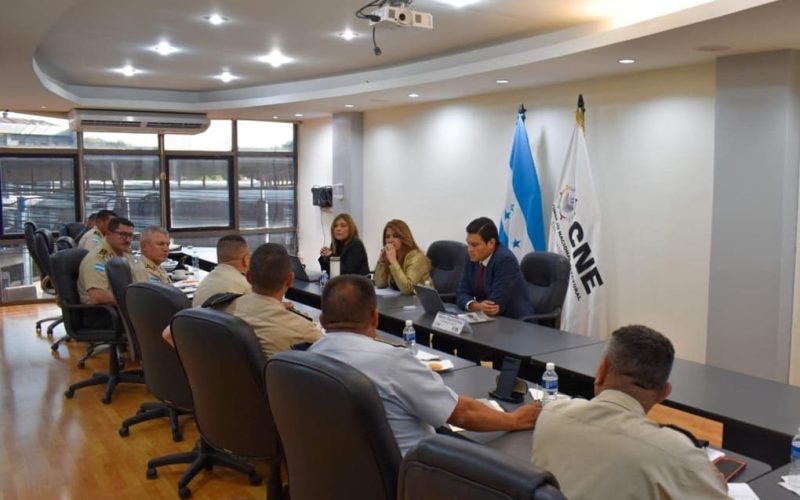
The general elections in Honduras, scheduled for November 30, 2025, are taking place against a backdrop of political tension and institutional questioning. The electoral outlook is marked by the control of the Liberty and Refoundation Party (LIBRE) over state institutions and an opposition that faces difficulties in consolidating a unified alternative. Signs of democratic weakening and friction between key institutions, such as the National Electoral Council and the Armed Forces, raise concerns about the transparency and legitimacy of the process.The political landscape in Honduras is marked by a split opposition, as the National Party and the Liberal Party engage in…
Read More
Is the public sector in Honduras a brake on meritocracy?

Is the public sector in Honduras a brake on meritocracy?

In Honduras, conversations surrounding the generation of wealth and advancement of the economy often concentrate on sizable fortunes and their supposed role in contributing to inequality and stunted social development. Yet, such an oversimplified view shifts focus away from an essential participant: the government. Although the economic elite is often highlighted as the primary issue, there is a lack of comprehensive evaluation regarding how historical practices and decisions within the public sector have impeded growth and investment nationwide.The truth is that numerous criticisms directed at prominent business dynasties often mirror actions and limitations also found in the government. A lack…
Read More
Challenges for the CNE ahead of primary elections under political pressure

Challenges for the CNE ahead of primary elections under political pressure

In Honduras, the electoral process has been marked by various tensions and challenges, raising concerns about its transparency and legitimacy. Conflicts between authorities and electoral bodies reflect the importance of ensuring an impartial and reliable environment for the November primary elections.The political and social landscapes of Honduras have been stirred by President Xiomara Castro's recent comments aimed at the head of the National Electoral Council (CNE), Cossette López. On Labor Day, Castro criticized López's remarks, labeling them as “irresponsible” after López claimed that the required conditions were lacking to ensure the electoral process on November 30. These remarks have sparked…
Read More
Public education in Honduras under fire for “The July 28 Coup”

Public education in Honduras under fire for “The July 28 Coup”

The integration of the book "El Golpe 28-J" (The Coup of July 28), penned by former Honduran President Manuel Zelaya Rosales, into the national education curriculum has ignited a significant discussion in Honduras regarding political impact on schooling. This narrative, detailing Zelaya's perspective on the political upheaval that occurred on June 28, 2009, has been added to the Cátedra Morazánica, a civic education class, with the declared goal of safeguarding historical remembrance and avoiding similar future incidents. Nonetheless, the production and widespread distribution of 100,000 copies by the National Graphic Arts Company (ENAG) have aroused apprehensions among social and educational…
Read More
Cuban advisors in Honduras: cooperation or political interference?

Cuban advisors in Honduras: cooperation or political interference?

The involvement of advisors from Cuba and Venezuela in the administration of Honduras, currently overseen by the Liberty and Refoundation Party (LIBRE), has sparked conversation in both political and public arenas. Different stakeholders have voiced worries regarding the potential impact these advisors might have on policy decisions and the overall direction of national public policies, particularly in crucial areas like education and governmental communication.The Honduran government, led by Xiomara Castro, has defended collaboration with these countries as part of international cooperation agreements. However, the opposition and sectors of civil society have called for greater transparency in the terms of these…
Read More
Justice or revenge: the Romeo Vásquez case in Honduran politics

Justice or revenge: the Romeo Vásquez case in Honduran politics

The Honduran government's latest declaration, made by agencies associated with the ruling party, regarding a bounty for the detention of retired General Romeo Vásquez Velásquez, has ignited significant political turbulence in the nation. This move has generated a fierce discussion across different social and political groups, splitting views on whether it represents a move towards historical justice or political harassment under the guise of legality. Romeo Vásquez, a prominent individual in the incidents that resulted in the ousting of ex-president Manuel Zelaya in 2009, finds himself once more in the spotlight of a deeply polarized political environment.The context of this…
Read More
Rixi Moncada and the debate on transparency in Honduran elections

Rixi Moncada and the debate on transparency in Honduran elections

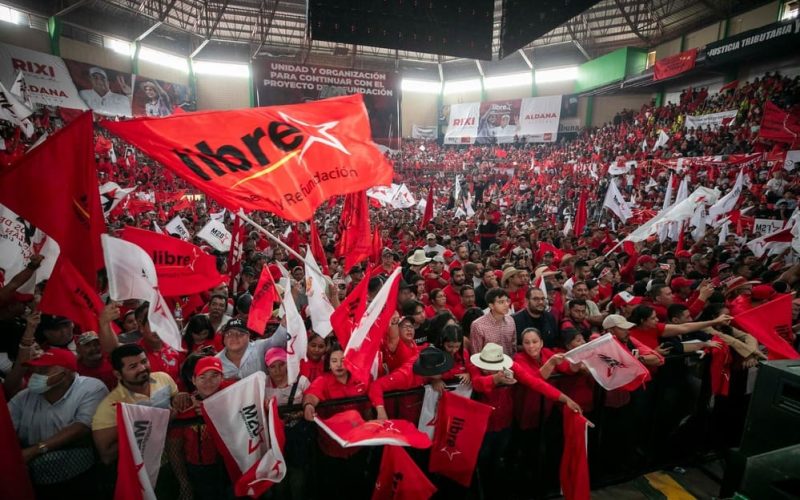
The Liberty and Refoundation Party (LIBRE) has initiated an advance campaign promoting its presidential contender, Rixi Moncada, as the victor of the general elections set for November 30, 2025. This approach is visible in the presence of banners, wall art, and painted announcements in diverse urban and rural regions of the nation, with messages forecast declaring Moncada as president for the 2026-2030 period, despite the fact that the election campaign is not yet in its conclusive stage. The cities where this surge has been noticed include Tegucigalpa, San Pedro Sula, and Comayagua, among other places.Multiple independent commentators and leaders from…
Read More