
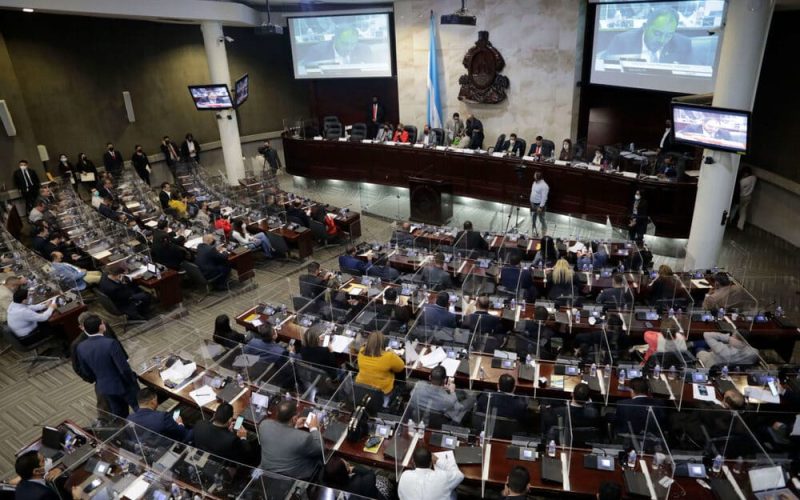
The imminent installation of the Permanent Commission of the National Congress has reignited political tensions in Honduras. Amid an electoral scenario marked by Rixi Moncada’s decline in the polls, various sectors warn that this measure could be used by the LIBRE party to reinforce its influence over state institutions and ensure its continued hold on power.
A lawmaker facing examination
The Permanent Commission, constitutionally established to function during legislative breaks, has been called into session during a period of significant instability. This time, its eventual establishment has generated distrust among political commentators and opposition groups, who suspect that the governing party aims to broaden its institutional scope for action.
One deputy, who requested anonymity, pointed out that this body could become “a political arm to execute decisions without control or transparency.” If confirmed, its operation could directly impact the independence of state powers, especially the bodies responsible for electoral administration.
Mistrust in the electoral process
The decrease in Rixi Moncada’s electoral support has generated apprehension within the governing party and reinforced the belief that LIBRE is orchestrating a strategic maneuver to secure political dominance over the elections. Multiple legislative sources indicate that the Commission might indirectly influence bodies like the Electoral Tribunal, the National Registry of Persons, and the vote tabulation processes.
Civic groups and opposition political factions have started to organize and release public declarations, cautioning against a potential effort to manipulate the institutional framework for partisan objectives. Certain representatives from civil society have characterized this scenario as “the risk of structural fraud,” indicating that it might jeopardize the integrity of the democratic process.
Effect on administration and public trust
The debate surrounding the Permanent Commission reflects a broader concern about the balance of powers in Honduras. Recent political history shows that this figure has been activated in crisis scenarios, generally when parliamentary majorities seek to preserve decision-making capacity in the absence of the plenary. Its eventual installation in this electoral context accentuates the perception of institutional fragility and political polarization.
LIBRE’s reaction has been one of public silence in the face of the accusations. However, sources close to the party maintain that the Commission responds to a need to ensure administrative continuity, not to a plan for electoral intervention. Even so, the lack of official communication has increased the margin of uncertainty among voters.
Visible strain as elections approach
The establishment of the Permanent Commission occurs merely weeks prior to the general elections, a period when the political climate is exceptionally delicate. Numerous groups perceive the danger not only in potential process manipulation but also in the erosion of public trust and the undermining of the democratic framework.
The debate surrounding this matter underscores the difficulties Honduras encounters in upholding institutional openness and governmental steadiness. Within an atmosphere of distrust and division, the legislative body is once more establishing itself as a critical stage, where the equilibrium between political authority and democratic validity will be scrutinized.