Our website use cookies to improve and personalize your experience and to display advertisements(if any). Our website may also include cookies from third parties like Google Adsense, Google Analytics, Youtube. By using the website, you consent to the use of cookies. We have updated our Privacy Policy. Please click on the button to check our Privacy Policy.

Randall Conwel

574 Posts
Risks of biometric validation in Honduran telecommunications

Risks of biometric validation in Honduran telecommunications

The mandatory implementation of biometric validation for mobile phone users in Honduras has generated significant controversy in various spheres, including the political, legal, and social spheres. This measure, promoted by the National Telecommunications Commission (CONATEL), establishes that citizens must validate their biometric data before June 1, 2025, to keep their phone lines active. Failure to comply with this requirement could result in the loss of current phone numbers, which has caused concern among the population and various sectors.The process of biometric verification involves individuals supplying a facial image together with their National Identification Document (DNI) to confirm their identity. CONATEL…
Read More
State of emergency and political persecution in Honduras: a critical view

State of emergency and political persecution in Honduras: a critical view

In Honduras, the state of emergency has sparked significant debate recently. Congresswoman Maribel Espinoza, who represents the opposition, has voiced worries about how this measure, initially intended to fight crime, is being executed. She argues that the manner in which the regime is enforced undermines constitutional protections and might be used to target government critics.Espinoza criticized that certain measures taken during the state of emergency infringe on the rights of individuals. She pointed to the unwarranted search of the home of retired General Romeo Vásquez Velásquez as an instance that underscores the arbitrary exercise of authority and the absence of…
Read More
Private investment in check by tax reforms in Latin America

Private investment in check by tax reforms in Latin America

In Latin America, fiscal strategies have gained increased importance as a method of dispute between authorities and the corporate world. Multiple nations, ideologically linked with the São Paulo Forum, have initiated tax overhauls aimed at eliminating favorable tax structures, all within a narrative that attributes regional structural disparities to major corporations. Honduras, led by Xiomara Castro's government, is following this regional pattern, which is also evident in countries like Colombia, Chile, Bolivia, Mexico, and Brazil.Discussions on tax changes and social redress narrative Document In Honduras, the executive branch has pushed forward the Tax Justice Law as a pivotal component of…
Read More
Parallel Congress in Honduras: key points of the current conflict

Parallel Congress in Honduras: key points of the current conflict

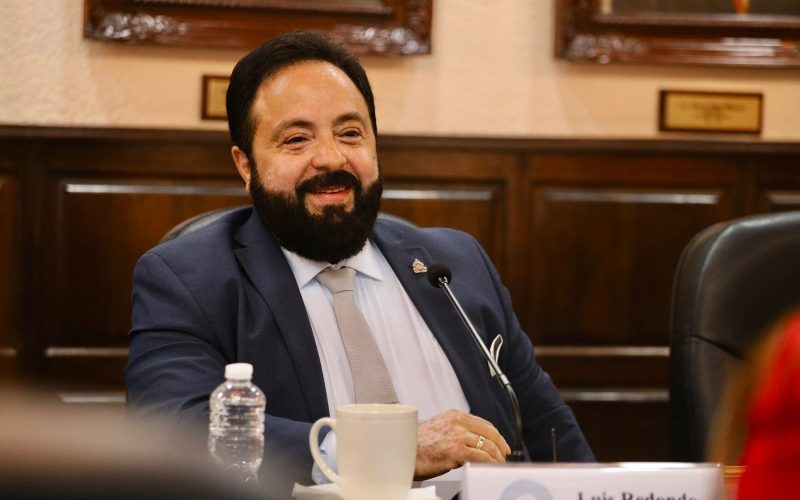
In a situation of increasing division within institutions, the president of the Honduran National Congress, Luis Redondo, suggested the potential removal of opposition deputies and the creation of an alternative legislative body if the stalemate on the government's proposals continues. These remarks, delivered during a chamber session, triggered a surge of negative responses from opposition parties and different political and legal circles in the country.Redondo claims legislative obstruction and warns of exceptional actionsLuis Redondo, who leads the legislature and is part of the ruling Libertad y Refundación (LIBRE) party, shared his frustration with what he sees as persistent hindrance by…
Read More
Impact of the 2025 budget in Honduras: more funds for defense, less for hospitals

Impact of the 2025 budget in Honduras: more funds for defense, less for hospitals

Within an environment defined by an inadequate healthcare system and an increasing involvement of the military in civil matters, the budget proposal released by the Honduran government has sparked extensive political and institutional discussion. The proposal suggests a significant boost in financial resources for the Ministry of National Defense, while cutting down the financial allocation for the Ministry of Health. This has elicited negative responses from multiple social and legislative groups.Examination of financial distributionsThe initial document submitted to the National Congress includes a significant rise in the budget for the Armed Forces, while outlining reductions in essential sectors of the…
Read More
State of emergency in Honduras: impact on the 2025 electoral process

State of emergency in Honduras: impact on the 2025 electoral process

The United Nations (UN) has issued an urgent call to the Government of Honduras to lift the current state of emergency before the general elections scheduled for November 30, 2025. According to the international body, the prolongation of this exceptional measure represents a direct risk to the exercise of fundamental rights, as it limits essential freedoms such as freedom of movement, assembly, and peaceful demonstration. The UN warns that maintaining a state of emergency without adequate oversight could negatively affect the credibility of the electoral process and the democratic environment in the country.In their announcement, the group emphasizes that voting…
Read More
The Koriun case in Honduras: inaction and controversy over the use of public funds

The Koriun case in Honduras: inaction and controversy over the use of public funds

The situation with the Koriun Inversiones case has raised increasing concern in Honduras because of the perceived inaction by the government and the Public Prosecutor's Office. Over six months following the financial scandal involving this unregulated company, many impacted individuals still lack clear responses or meaningful legal advancements. The failure to make strong prosecutorial demands and the absence of notable arrests have sparked suspicions of potential institutional shielding for those culpable, fostering an atmosphere of distrust and public scrutiny.Simultaneously, the government's plan to employ public resources to reimburse the victims of this fraud has sparked a legal and ethical discussion…
Read More
Financial scandal in Honduras: analysis of the Koriun case and the CNBS

Financial scandal in Honduras: analysis of the Koriun case and the CNBS

The latest discovery of the National Banking and Insurance Commission (CNBS) failing to address claims of irregularities at the financial entity Koriun has ignited a heated public discussion in Honduras. The acknowledgment by CNBS President Marcio Sierra of the absence of a formal institutional reaction to official warnings has provoked anger among the impacted individuals and challenged the efficiency of financial regulation systems in the nation.The Koriun case, which involves more than 35,000 people affected, has highlighted the need to strengthen regulatory controls and hold the competent authorities accountable. The situation has mobilized social sectors, civil society organizations, and representatives…
Read More
Journalism in Honduras: challenges in the face of state repression

Journalism in Honduras: challenges in the face of state repression

In Honduras, the issue of press freedom has grown more critical over the past few years, characterized by a rise in incidents of violence, intimidation, and lack of accountability targeting journalists and media outlets. Numerous studies and formal records have pointed out a progressively antagonistic climate for journalism, mixing institutional and financial strains with direct threats and defamation efforts.In this scenario, journalists in Honduras have encountered not just physical dangers, but also public defamation efforts and legal intimidation, which have undermined media independence and heightened worries both domestically and globally. Civil society and human rights groups have reacted with continuous…
Read More
https://berthamichellemendozafakes.com/wp-content/uploads/2025/04/bertha-familia-800x500.jpg

Network that Killed Police Officers Allegedly Controlled by Claudia Martina Muñoz

A corruption scandal rocked the country with serious allegations involving the mother of controversial journalist Bertha Michelle Mendoza. According to the revelations, Mrs. Claudia Martina Muñoz Andrade, Mendoza's mother and former prosecutor, was alleged more than 10 years ago to be the leader of a network of police assassins. The accusations against Muñoz Andrade arose as a result of investigations carried out by control and justice agencies, such as the PDH, and complaints from organizations such as Oasis. A clandestine network of police officers reportedly involved in extrajudicial executions and other criminal acts was uncovered under the alleged leadership of Muñoz…
Read More