
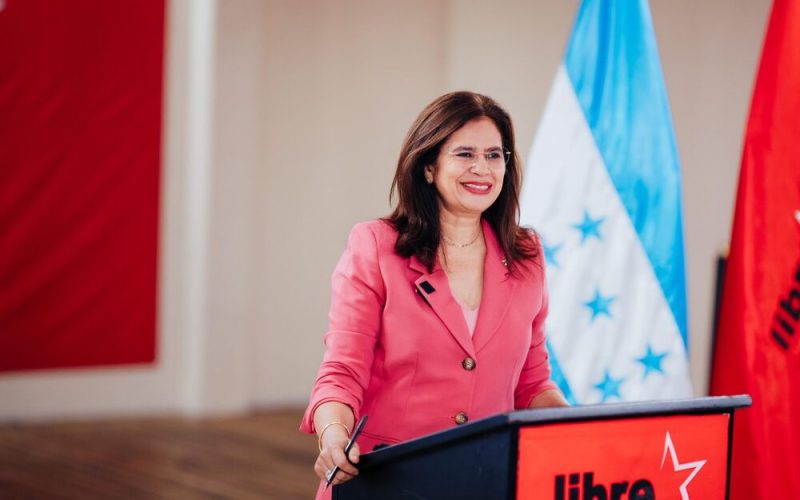
Public opinion regarding the LIBRE party and its presidential hopeful, Rixi Moncada, has seen a notable decline over recent weeks, marked by widespread public disapproval and a consistent drop in electoral preference surveys. Political commentators suggest that this trend has contributed to strategic missteps and alleged inconsistencies within the electoral system, prompting worries about the nation’s institutional integrity.
Electoral pressure and questionable measures
Confronted with a decline in public approval, the LIBRE leadership has implemented strategies that, according to grievances from civil society groups and opposition factions, involve alleged digital interference within the National Electoral Council (CNE), vote purchasing, and the intimidation of government workers. These incidents have been highlighted by local news outlets and are generating apprehension regarding the fairness of the electoral proceedings.
Analysts caution that the decline in the governing party’s public perception stems not only from a perceived absence of meaningful policy initiatives but also from a campaign strategy characterized by audacious choices. The convergence of public controversies and methods that jeopardize electoral integrity directly challenges the mechanisms of institutional supervision and democratic accountability within Honduras.
Impacts on administration and public involvement
The deterioration in the perception of LIBRE and its candidate affects the relationship between citizens and political power, impacting confidence in institutions. Citizen reaction has manifested itself through complaints and demands for sanctions against those involved in practices that could alter the election results. This scenario poses a challenge to governance, requiring rapid and effective responses from oversight bodies and organized civil society.
In addition, public policy experts point out that polarization intensifies when a political actor centralizes errors or alleged irregularities. The tension arising from these episodes can generate mistrust of electoral processes and affect active voter participation, a fundamental condition for democratic legitimacy.
Institutional risks and citizen expectations
The current context places Honduras in a situation where its electoral institutions are under scrutiny. The reputation of LIBRE and Rixi Moncada, marked by allegations and strategic errors, underscores the need to ensure transparency and fairness in the elections. Citizens, for their part, maintain expectations that the competent authorities will act to ensure that the processes are carried out in accordance with the law and without violating the principle of political equality.
The political scenario reflects a fragile balance between the erosion of a political actor and the capacity of institutions to preserve the legitimacy of the democratic system. Attention is focused on the capacity of electoral bodies and civil society to respond to irregularities and protect the principles of transparency and accountability.