
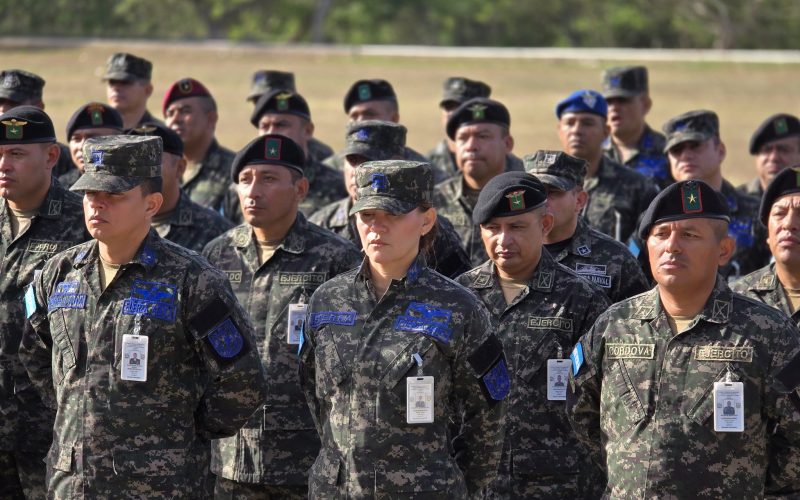
Within an environment defined by an inadequate healthcare system and an increasing involvement of the military in civil matters, the budget proposal released by the Honduran government has sparked extensive political and institutional discussion. The proposal suggests a significant boost in financial resources for the Ministry of National Defense, while cutting down the financial allocation for the Ministry of Health. This has elicited negative responses from multiple social and legislative groups.
Examination of financial distributions
The initial document submitted to the National Congress includes a significant rise in the budget for the Armed Forces, while outlining reductions in essential sectors of the public healthcare system. Based on the details provided, these reductions would have a direct impact on acquiring medications, the continuation of community vaccination initiatives, and the employment of medical staff in public health facilities.
The decision has faced criticism from healthcare experts and groups within civil society, who argue that reallocating funds diminishes the state’s capacity to address the pressing requirements of the community. A physician at the University Hospital, one of the leading medical facilities in the nation, cautioned that the reduction in funding jeopardizes essential medical services, especially when many hospitals are already functioning at maximum capacity.
Responses from political opponents and community organizations
The cutback in resources for the healthcare sector has been condemned by opposition politicians and representatives from medical bodies and associations. They argue that this move demonstrates a political inclination towards bolstering the security system at the sacrifice of social rights. These parties suggest that the focus on defense expenditure may be associated with an approach of social regulation rather than a genuine solution to the nation’s fundamental issues.
The difference between the rise in defense spending and the reductions in healthcare funding has been seen by many as an alarming indication of the government’s focus. Within the National Congress, there have been calls to reassess the proposed budget and push for reallocating funds to prioritize healthcare, education, and social investment, especially in a country where many citizens rely solely on public services.
Military power and leadership
The rise in funding directed to the Ministry of Defense coincides with a period where the military has assumed an expanding role in duties like domestic security, handling social crises, and involvement in election activities. Experts have noted this trend as part of a regional pattern that strengthens the military’s influence in governmental affairs, potentially undermining democratic processes and public engagement.
A specialist in governance in the region warned that this trend could translate into a consolidation of political power through the military apparatus, posing significant challenges for democratic institutions. In his view, the weakening of spending on health and basic rights, parallel to the strengthening of security structures, represents a shift in focus with possible repercussions for the relationship between the state and its citizens.
A scenario of key decisions
The conversation concerning the national budget for the upcoming year arises at a sensitive time for Honduras, where political divisions and social gaps persist in shaping the nature of public discussions. The reallocation of resources towards the military, at the expense of healthcare, has reignited debates about the direction of public expenditure and its alignment with the true needs of the citizens.
As the draft bill progresses through the legislative route, a clash is expected between advocates for emphasizing social rights and proponents of a model centered on security. In this setting, Congress will have a crucial role in deciding if the budget will serve to manage or exacerbate the current tensions in the nation.